
Last updated on May 25th, 2019 at 10:08 am
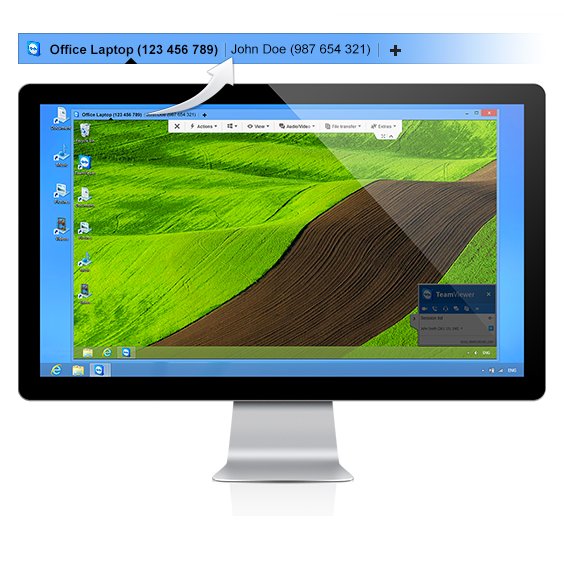
Yes, you can wake up a computer/laptop via Wake-on-LAN using your tablet or smartphone. To do so, you must configure TeamViewer Wake-on-LAN via your router (DynDNS) or TeamViewer IDs as described above. This allows you to wake up your laptop, computer, workstation, or other devices that are running Windows or Mac. TeamViewer has the ability to wake up a sleeping computer and return it to sleep state on disconnect. Very lightweight file size. At 1.1MB, it's a lightweight program that you can set up quickly. After a while your MAC.
- Download Magic Packet - Wake On LAN and enjoy it on your iPhone, iPad, and iPod touch. USE CASES: - Wake up the computer for connecting over TeamViewer/VNC/RDP - Turning on/off computers for students in the classroom - Starting home server or NAS after a power failure - Waking up your PC remotely using Siri KEY FEATURES: - Siri Shortcuts.
- MAC-address include computers - Connection type - Login/pass (not required for connection type Wake-on-LAN) After switching to it, you can easily connect via TeamViewer. For all questions ready to help and answer, write to the post freask@mail.ru.
- Win/OS X/Linux: Teamviewer, one of our favorite online meeting and remote troubleshooting tools, just unveiled a new beta that's packed with new features. Users can now boot or wake up computers.

It is never a healthy option to keep your PC active all the time, not for your PC and environment as well. So keeping in mind about this we are covering how to wake up PC remotely from anywhere without your physical presence nearby. It is one of the best things that comes to stop unnecessary wastage.
There are many ways to Wake up PC Remotely from Sleep and here we are going to discuss most of them. Understanding some terminology, configuration on your WLAN, Windows PC is difficult so here we show you step by step tutorial that clears your every doubt.
Benefits of Waking Up PC Remotely?
Well, there are so many benefits of switching to wake up option.
- Your PC gets enough time to reboot when sleep mode is active. This improves PC performance
- Power saving, useful for the environment
- Better performance of hardware
- Not require any physical presence of anyone all the time
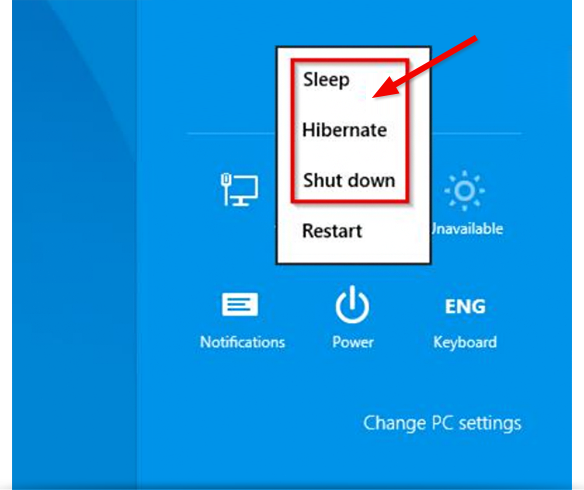
TIP: Generally, it has been noticed that keeping your PC in sleep mode if you have a little span of rest reboot your PC and improves startup speed and normal running speed of your system. Suppose you have done your work for 4 hours regular and you need a 1-hour break then it is recommended to make your PC to Sleep mode except doing Shut Down. This optimizes your PC performance.

RECOMMENDED:Battery dying fast? – Quick guide to improve performance
Now let us check what are different ways to Turn ON your PC remotely.
How to Wake PC Remotely from Sleep Mode?
1.Using WoL (Wake on LAN) Option
This option is bit easy to wake your PC remotely. If you are unfamiliar with the term WoL then firstly know what it then proceeds further.
WoL (Wake on LAN) is a protocol medium or follows a particular standard that wakes your PC using Network message. All you need is to set a programme on another device connected to the same Local Area Network.If you are unable to connect the devices with the same LAN then you need to check out a different method.
Working with WoL
- Type Network proxy settings in the search bar space near the Start menu icon. On the left side click Ethernet.
- From the list displayed on the left pane, tap on Change Adapter Options.
- Right-click on your primary Ethernet adapter and select Properties.
- Click on Configure option.
- Under the Advanced tab, firstly tap on Wake Up Capabilities (on the left side) change Value from the drop-down list. Either choose Magic Packet or Magic Packet & Pattern Match.
- Now tap on Shutdown Wake Up and Enable it.
- Go to Power Management tab, uncheck all the options.
NOTE: You must turn Off Fast Startup feature that is by default enabled in most of Windows PC. Disabling this feature takes more time to load your PC but WoLAN only works while Fast Startup is disabled.
Now you are ready to set up WoLAN. Here we suggest you use the third-party app called TeamViewer. This app offers a free download that wakes up your PC from Standby, a Sleep mode or a
- Download TeamViewer for free.
- Launch it on your desktop which you want to access remotely.
- Go to Computer & Contacts list, sign up and select the server you are having connection and tap on Wake up option.
- The pop-up window appears, click on the Connect option if you wish to connect with the device now.
With these steps you can control your PC in easy way. Now let us check some other ways for this.
2. Using a Static IP on your PC
In order to remotely wake your PC, you must provide your PC
Providing a Static IP is another best way to awakening your PC. As your router may allow your device different IP address periodically. But once you have set to the static IP then the further configuration would be easy.
Follow some simple steps to allocate static IP on your computer. Firstly check your Physical address, IPv4 address.
- Open Control Panel. Navigate to Network and Internet> View Network Status and Task.
- From the left pane menu list, select Change Adapter Settings.
- From the list of all your connected networks, right click on the network you are using currently. Click on Status.
- On a General tab of your LAN, tap on Details.
- Here you can see all your current Physical address of PC, IPv4 address. Take a screenshot of this.
- Now again go back to Change Adapter Settings screen, this time on your LAN network, right-click to open Properties section.
- Scroll the list and look for Internet Protocol Version 4 (TCP/IPv4). Select it and then click Properties.
- Under General tab, your settings are set to be default automatic obtaining of IP address. Mark Use the following IP address and Use the following DNS server address respectively.
- Enter your IP address, Subnet mask, Default gateway, Preferred and Alternate DNS server and click OK.
It has noticed many times that after switching to static IP or manually changing an IP Address and DNS server address, internet not working properly. At that time check the quick guide to fix this problem.
Now again you can remotely wake your PC using TeamViewer application.
Alternately if you are not interested to follow these complicated steps we recommend you to use third-party applications which are primarily made for remotely access.
Best Applications for Remote Access
Here we are going to discuss some of the best third-party applications that make things easier than you expected.
1.TeamViewer
TeamViewer is the first name comes on every mind when we hear a best remote access application. This provides a free version and a paid version. It is simple to use and easy to navigate all the features. It has clear Interface that makes it more attractive. You can control your PC through TeamViewer no matter where you are. You can also connect to thousands of people and sharing screen, data, and much more. TeamViewer comes in different plans
- Free version
- Business license
- Premium license
- Corporate license
You can also set several add-ons to this. There are many alternatives to TeamViewer if you are looking for a Pro version.
2. LogMeIn
LogMeIn is another best app to manage your computer remotely. You can keep your work productive from around the globe with LogMeIn. This is light in weight and easy to use. For easy handling and keeping eye on your device, you can use it on your Smartphone also. LogMeIn comes in different plans and comparatively cheaper option compared to TeamViewer.
3. Splashtop
Splashtop is another reliable, secure, and easy to deploy tool. Similar to above, tools it also uses encrypted with TLS and 256-bit AES which is the best security encryption. For business purposes, you can get Remote support, On-demand support for ease in usage. This offers a free trial period and you can upgrade to pro anytime. If you have a low budget and want to upgrade to the pro version then Splashtop is the best choice.
I hope you find this tutorial about How to wake PC remotely useful and informative. You can also try the top remote accessing application that can be controlled through a single click from your smartphone.
For latest tech tutorials you can follow us on Facebook, Twitter. Don’t miss the regular updates, subscribe to the newsletter now.
You may also like:
From DD-WRT Wiki
English • Deutsch • Español • Français • Italiano • 日本語 • Polski • Português • Русский • Svenska • 中文(中国大陆) • 中文(台灣) • |
|
[edit]Introduction
Wake-On-LAN (WOL) provides the ability to wake a slept/suspended, hibernating, or shut down computer, but the support for this (especially the latter) is dependent upon the hardware and BIOS/UEFI settings. Most modern computers have the WOL feature - it might be listed under PME (Power Management Events).
Reasons to use WOL with DD-WRT:
- You do not want a computer on all the time, yet you want to use it from outside your home or office, and there is a DD-WRT-enabled device as the Internet gateway for that computer, powered on all the time.
- The computer is a media server that auto-sleeps, but you want it to wake automatically for file access.
[edit]Preparation
You will need:
- A PC which supports WOL. Most modern PC's can be set-up this way.
- Administrative access to the computer you want to sleep/wake-up.
- The WOL computer should have a static IP address, one manually assigned or through static DHCP. In the example below, we assume your router LAN is 192.168.1.x (the default) and the static IP WOL computer is 192.168.1.254.
- Ideally, a second PC to test the WOL abilities of the first one. You can also use the DD-WRT device's Web Interface to send test packets, in place of a second PC.
[edit]Enable WOL on the Computer
- On the LAN adapter of the computer (physical ethernet adapter and/or wireless, given BIOS support), choose Properties/Configure.
- Power Management tab (far right). Check the second and third boxes to enable WOL. Press OK until you are back at Network Connections. Now the computer can normally be started from Hibernate, Standby, or PowerOff modes via a special management packet.
- Get ready to test your set-up by using a utility like WOL Magic Packet Sender http://magicpacket.free.fr/ (free). Install it on both the computer you are using and a second PC on the same physical LAN.
- On the WOL computer, open WOL Magic Packet and on the Receive tab, click the green Start button.
- On the second computer, open WOL Magic Packet and on the Send tab, put in:
- IP Address of WOL computer for Host Name
- 0.0.0.0 for Subnet Mask (select from drop-down)
- MAC address of LAN adapter on WOL computer. Use the command 'ipconfig /all' if you don't know what this is.
- Click the green Send button. The WOL computer should respond with a pop-up box showing a packet was received.
Repeat the previous steps and go over the trouble-shooting tips until they work before proceeding.
[edit]Test that WOL works within the LAN
Hibernate, Standby, and Power-off the WOL computer, while clicking Send on the second computer, to test each mode to make sure WOL is working.
Once this step is working, you can go on to making WOL work when you are outside your LAN, such as at a cafe or another remote location.
[edit]Troubleshooting
Wake On LAN is usually disabled by default in most PCs. This feature, if optional, must be enabled in your BIOS otherwise WOL isn't going to work. Consult your motherboard's manual and BIOS screen (DEL at startup, usually). If you don't see the WakeOn-type options in your BIOS, usually somewhere in Power Management, your motherboard may not support WOL.
- A good place to start is here: [1]
[edit]WOL Methods
[edit]WOL through Telnet/SSH
Note: This is the preferred method to send WOL magic packets remotely.
If you have local or remote Telnet/SSH access to your router, you can wake up a machine on the LAN by using the following command:
Note that the full path to '/usr/sbin/wol' is important. Simply 'wol' will not work.
Substitute AA:BB:CC:DD:EE:FF with the actual MAC address of the computer which you wish to boot remotely. Likewise, replace 192.168.1.255 with the actual broadcast address of the network (192.168.1.255 is the broadcast address when the machine has an IP of 192.168.1.x and subnet mask of 255.255.255.0). Replace 'PP' with the port number your machine listens on (usually 7 or 9).
[edit]Remote Wake On LAN via Port Forwarding
To remotely wake up a computer over the Internet using Wake On LAN- follow these instructions:
1 - Create a port forward rule on the Web Interface (Applications & Gaming -> Port Range Forward) to the chosen ip:
- Here, 9 is the default, but you can use any port number so long as your client wake-up application can talk to a port other than 9. Most WOL services will use either UDP port 7 or 9.
- 192.168.1.254 is just an IP address in your LAN's subnet; it can be any IP, as long as it is not assigned to any device on your network.
Configure Wake On Lan Teamviewer
2 - Add a static ARP entry by typing the following line into the Administration -> Commands section of the Web Interface and then saving with Save Startup.
- Do not change the FF:FF:FF:FF:FF:FF MAC address; this is a special MAC address used when broadcasting. WOL magic packets are constructed using the MAC address of the target computer, but should be and almost always are sent via broadcast; the MAC address used here controls with how the packet is sent, not how it is formed.
- The 192.168.1.254 IP address should correspond with the IP address you used in the previous step. Again, this IP should be in your LAN's subnet, and you must not assign this IP address to any actual device on your network.
- Explanation/rationale for this setup: Normally, WOL magic packets are sent to a special broadcast IP--to the final .255 in a subnet or to 255.255.255.255. Since port-forwarding to these special dedicated broadcast IPs does not work, what we need to do is create our own broadcast IP by taking an unused IP and assigning it a broadcast MAC and then port-forward to that.
- As an optional alternative, instead of arp, you can use ip neigh (which does the exact same thing as arp). Support for ip neigh was removed from DD-WRT starting with build 17650, and arp is unavailable in DD-WRT builds older than 5672.
- NOTE: SOME BCM USERS HAVE REPORTED ISSUES WITH ARP. SEE THIS:
3 - Reboot the router, or execute the startup commands manually.
- To wake your computer from the internet using the DD-WRT device DynDNS name (or if you know it, the public IP of the router), try one of the following services;
- Mestrona's online WOL. You need to forward port 9 udp in step one, to use this service.
- Wake-On-LAN Online. It works both on ports 7 and 9 and allows WOL by a single URL of the form: http://mobile.wakeonlan.me/?ip=HOSTNAME&mac=MACADDRESS. It also allows for scheduled wakeup over the internet.
- To use the WOL Magic Packet application from a second PC:
- Host Name: DynDNS name of your DD-WRT device.
- Subnet Mask: 255.255.255.255
- MAC Address: WOL computer MAC address, not the DD-WRT MAC.
- Click the green Send button.
[edit]Automatic Wake-On-LAN Daemon
The Automatic WOL daemon will send out a periodic wake on lan packet at the intervals you specify. This may be useful to keep a system online most of the time even if it is turned off. (eg: A Media Center PC).
For Interval you can enter a value in seconds as low as 15 seconds and as high as 86400 seconds (1 day).Host name should be the broadcast address for your LAN. eg: 255.255.255.255 or 192.168.1.255.SecureON Password is computers that have a BIOS feature that secures the WOL function. If you do not have a BIOS that requires this form of password then you can leave the box blank or type in 00-00-00-00-00-00.MAC Address(es) should contain the MAC address of the networked machines you want a WOL to be sent to on your LAN.
The packets generated by the WOL daemon are sent to UDP port 40000. You likely will not need to worry about this unless the system you are attempting to send the WOL packet is on another subnet or you are trying to monitor the packets.
note: the UI says that the Interval accepts a range of 1-86400 seconds but it will only send out a WOL packet at a minimum of 15 second intervals. All values below 15 are accepted but the interval will still be every 15 seconds.
A useful tool for watching the WOL packets on a Windows computer is available at www.depicus.com/wake-on-lan (use port 40000 when monitoring) Or you can use a more generic protocol analyzer tool like Wireshark.
[edit]WOL Scripts
- Wake up a specific host when triggered from the internet: Web Server Wake-up.
- To wake by name: Name-based WOL.
[edit]See Also (forum discussions)
Teamviewer Wake Up On Lan Macbook
[edit]References
Wake On Lan Teamviewer Setup