
GarageBand patches include an EQ (equalizer) effect that is very useful for optimizing the sound of your tracks and projects. The EQ effect includes the following features:
Eight independent EQ bands arranged from low (bass) to high (treble)
How to use Autotune in GarageBand iOS Love it or loathe it, Autotune (or pitch correction) is a staple of modern music production. Whether used sparingly to tighten up an otherwise great vocal performance, or cranked up to create a more robotic sound, knowing how to apply the effect to your projects is something you’ll want to get the hang of.
Presets optimized for different uses and for specific instruments
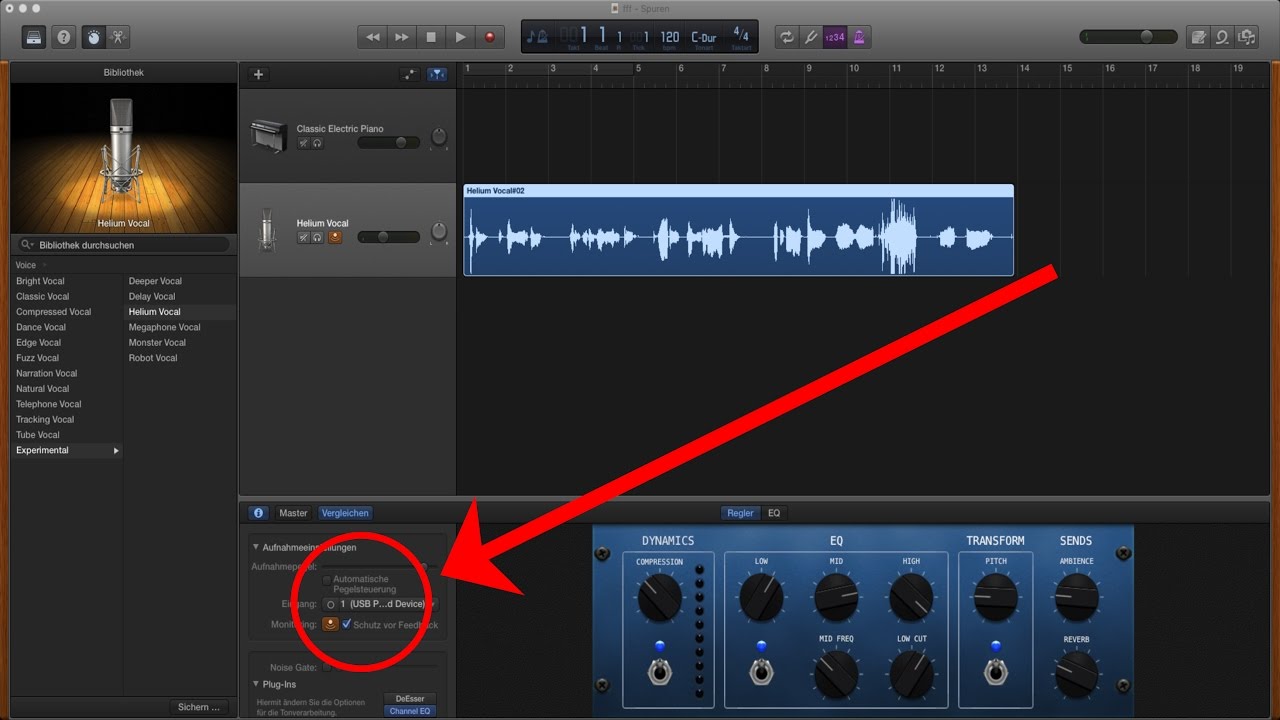
- GarageBand additionally offers the capacity to record at both 16-bit and 24-bit Audio Resolution, yet at a settled specimen rate of 44.1 kHz. An included tuning framework assists with pitch amendment and can viably emulate the Auto-Tune impact when tuned to the greatest level.
- The auto tune effect is great in R&B, Hip Hop, and maybe even Pop music. Your imagination is the limit when you're working with vocal effects. With the large selection of royalty-free loops that come with GarageBand, there is a lot you can do if you're an indie musician. Using auto tune is surprisingly simple, it only takes a few steps.
An Analyzer that lets you see the frequencies of the track as it plays, so that you can decide which frequencies to boost or cut
Show the EQ effect
Click the Smart Controls button in the control bar to open the Smart Controls pane.
Click the EQ button in the Smart Controls menu bar.
If the patch doesn’t already contain an EQ plug-in, one is added after the last plug-in in the patch.
The EQ appears in the Smart Controls pane. In the center is the graphic EQ display. Across the top are symbols that identify each EQ band. On the bottom are the Analyzer button and the numeric displays of Frequency (Freq), Gain/Slope, and Q (resonance) for the selected EQ band.
Note: You can use more than one EQ effect in a patch, either by adding another EQ or by changing an existing effect plug-in to an EQ. When a patch has more than one EQ, only the first (highest) one appears in the Smart Controls EQ pane when you click the EQ button. You can open the other EQs in a separate plug-in window.
Adjust EQ settings
To adjust an EQ band graphically: Click an EQ band to activate it, then drag the control point for that band up or down to raise or lower the level for that band. Drag left or right to change the frequency for that band.
The graphic display visually shows your changes.
To adjust an EQ band numerically: Click an EQ band to activate it, then drag the Freq, Gain/Slope, or Q number up or down. You can also double-click the number and enter a new value.
To adjust the overall gain: Drag the Gain slider on the right side of the EQ display.
To turn off the EQ effect: Click the Inspector button , then click the Power button in the Smart Control inspector.
Use EQ presets
To choose a preset: Click the Inspector button , then choose a preset from the Preset pop-up menu in the Smart Control inspector.
To save a custom preset: Click the Inspector button , choose Save As from the Preset pop-up menu in the Smart Control inspector, type a name for the present, then click Save.
Asw Auto Tune On Garageband Keyboard
Use the Analyzer
Asw Auto Tune On Garageband Music
To use the Analyzer: Click the Analyzer button, then play the project.
While the project plays, the frequency curve for the track appears in the graphic display area of the EQ window, showing which frequencies are louder or softer. You can adjust the EQ bands in the graphic display while you watch the frequency curve.
To turn off the Analyzer: Click the Analyzer button again.

Be sure to turn off the Analyzer when you’re not using it. When the EQ window is visible, the Analyzer uses additional processing power.
You can use the EQ effect on the master track to shape the sound of the overall project, and on individual tracks.